
Hospitality & Restaurants
From order to table, connected.
A restaurant coordinates customers, orders, ingredients, staff, preparation, fulfillment, and payments — often within minutes of each other. Elion connects that sequence instead of leaving each step to be re-entered by hand.
What changes
One order, carried through the whole operation.
A table selected, a QR order placed, a reservation confirmed — each is a signal. Connected, that signal reaches payment, the kitchen, stock, and management visibility without a second re-entry at every step.
Recognizable pressures
Where a service can quietly lose time and margin.
- Orders entering through the counter, QR tables, and delivery apps, none of it reconciled
- The same order or payment choice re-entered at a second step
- Menu items sold after they've run out
- Kitchen routing that depends on someone physically calling it out
- Inventory consumption nobody tracks until the next stock count
- Sales and operational reporting that arrives a day late, assembled by hand
The operational story
What one connected order actually looks like.
An illustrative operational scenario: the first two beats use real, captured screens from the Shoyuzuke storefront; the rest — kitchen, stock, exceptions, management — is restrained motion graphics for stages without a filmed system yet. The written sequence beneath it carries the same story.
Source captures used above

Shoyuzuke storefront
Authentic Elion interface — brand reference implementation
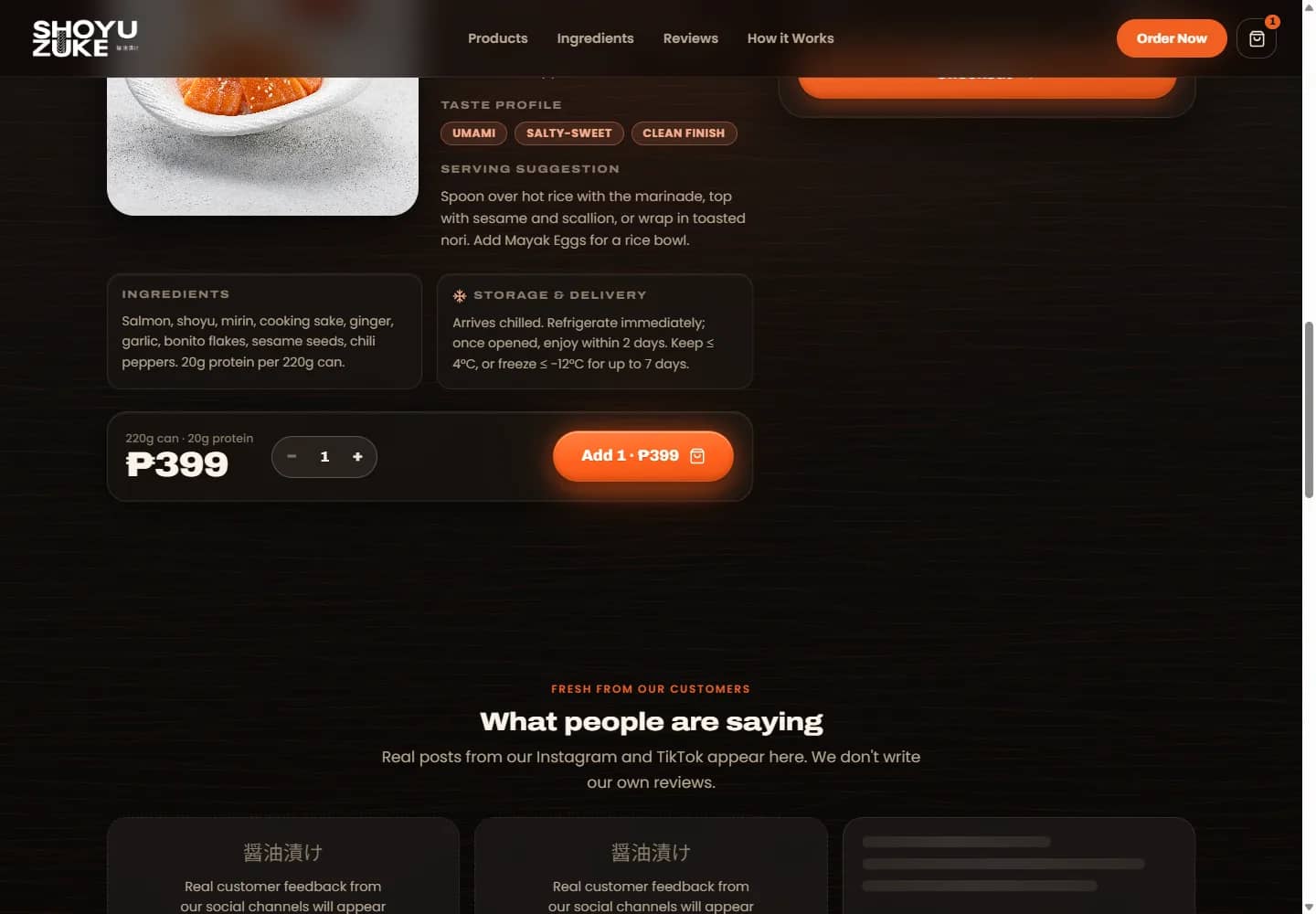
Shoyuzuke storefront
Authentic Elion interface — brand reference implementation
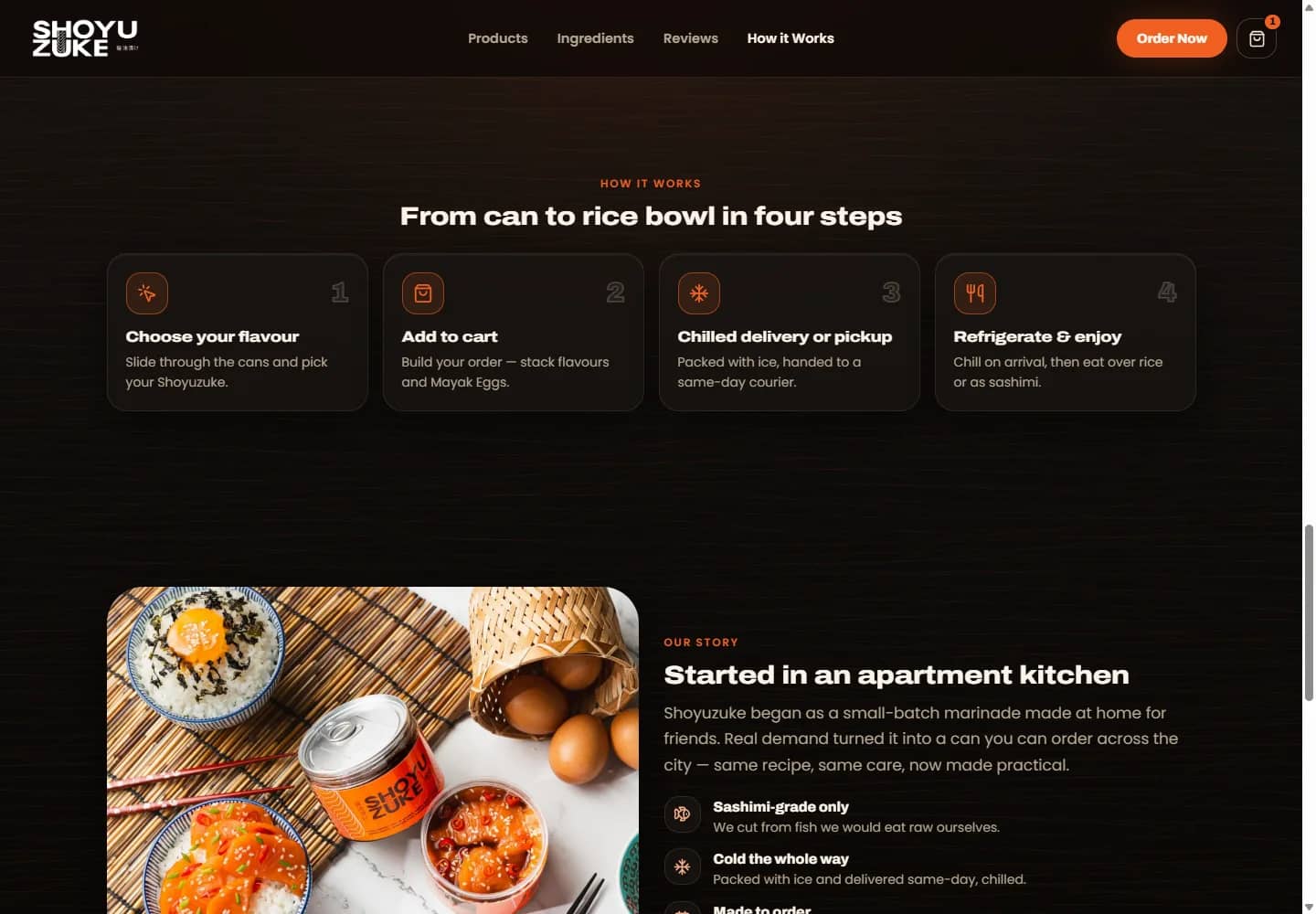
Shoyuzuke storefront
Authentic Elion interface — brand reference implementation
Where the order lands
The kitchen sees the ticket the moment it is paid.
Once an order is confirmed it appears here, in the queue for whoever is cooking it — with elapsed time on every ticket and a late flag before the guest has to ask. The bar runs the same board against its own thresholds.
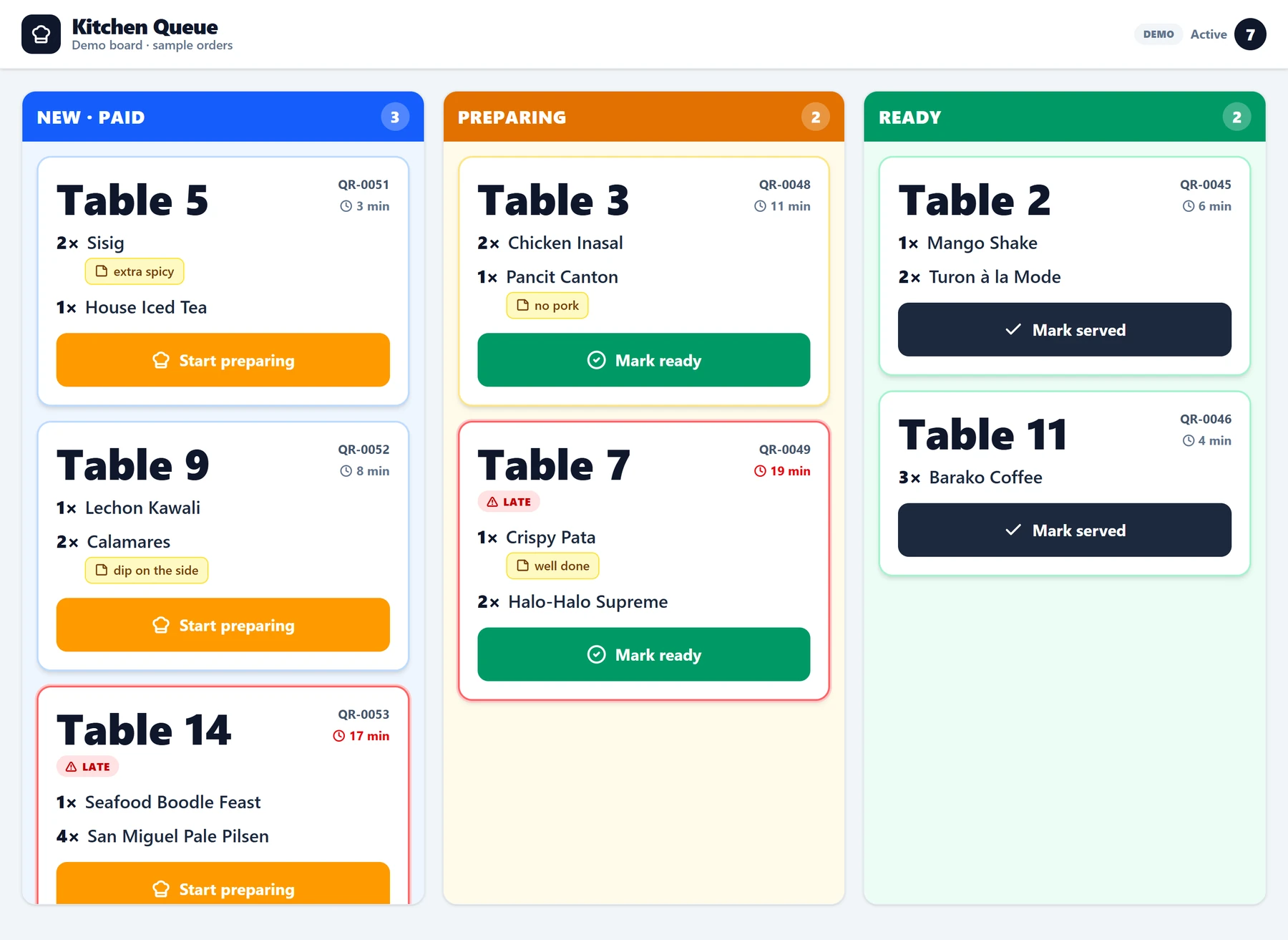
Tickets move new → preparing → ready, with elapsed time and late flags visible to everyone on the line.
Demonstration board with sample orders, labelled DEMO in the product itself.
Accessible narrative
The same story, in writing.
Everything the video would show, described step by step — fully understandable with or without the footage.
- 1
Guest
Order placed
A guest orders at a QR table, the counter, or online — recorded once, at the source.
- 2
Payment
Carried forward
The order carries straight into payment or confirmation. Nothing gets re-typed.
- 3
Kitchen
Kitchen notified
The ticket reaches the right prep or fulfillment queue immediately.
- 4
Stock
Stock adjusted
Ingredient counts step down automatically as the ticket is accepted.
- 5
Exception
Exception flagged
A low-stock item or delay is flagged to a person, not discovered at close.
- 6
Management
Seen in real time
Sales and exceptions are visible live — not assembled by hand the next morning.
The financial effect
Where operational savings can come from
Not every mechanism below applies at the same scale to every kitchen — an assessment identifies which are real for yours.
Waste avoidance
Better visibility into ingredient consumption can reduce over-ordering and avoidable food waste.
Labor & admin time
Fewer manual handoffs between order-taking, the kitchen, and reporting reduces repeated data entry.
Revenue capture
Orders and reservations are less likely to be missed or duplicated across channels, which helps prevent lost sales.
Management decision-making
Exceptions and stock issues surface as they happen instead of being found during a stock count or a delayed report.
Actual financial impact depends on the company’s existing processes, transaction volume, operating conditions, implementation scope, and adoption. A Systems Assessment identifies which opportunities are real and measurable.
How the solutions apply here
Commerce, Operations, and Workspace, working together.
Build can extend a hospitality operation too, but these three are usually where it starts.
Takes the order once — counter, QR, or online — and carries it into payment and fulfillment.
Tracks ingredient consumption, purchasing, and multi-location stock as orders move.
Routes the ticket and any exception to the right person, with the order's context attached.
Data carries information between whichever of these are in scope — not every engagement needs all five.
Where to begin
What Elion may keep, connect, improve, automate, or build.
Keep
A POS or booking tool that already works stays in place.
Connect
Channels that don't currently share data get connected.
Improve
A slow kitchen or stock process gets sharper, not replaced.
Automate
A manual handoff a system could safely do gets removed.
Build
Where nothing off-the-shelf fits the real service flow.
When it fits
An assessment usually makes sense when...
- Orders come through more than one channel and don't share a record
- Kitchen routing still depends on someone calling it out across the room
- Food cost or waste is hard to explain without a manual stock count
- Owners can't see today's sales without calling a location
Operating context
Real hospitality experience, not a demo — with honest status labels, and no claim that every integration shown here is already production-complete.
The Fun Roof
Operating systemQR ordering, POS, payments, reservations, and venue operations, running in a live venue.
Shoyuzuke
Operating systemOrdering, fulfillment, and customer experience, running as part of an active business.
Status reflects each system’s stage today, not a commercial claim. Verified screenshots and full case studies are in preparation and arrive in a later stage.
Where this connects
Commerce is where this journey starts — order, payment, and reservation in one connected front end.
Operations tracks the ingredient and purchasing side once orders start drawing down stock.
Workspace is what routes the ticket and any exception to the right person on shift.
The next step
Start with a Systems Assessment.
A focused conversation about how your operation runs today, where it loses time, and what a connected system would change. No obligation to build anything.
In an assessment we
- Understand how your operation runs today
- Identify the disconnected systems and bottlenecks
- Map the highest-value improvements
- Decide together whether Elion is the right fit